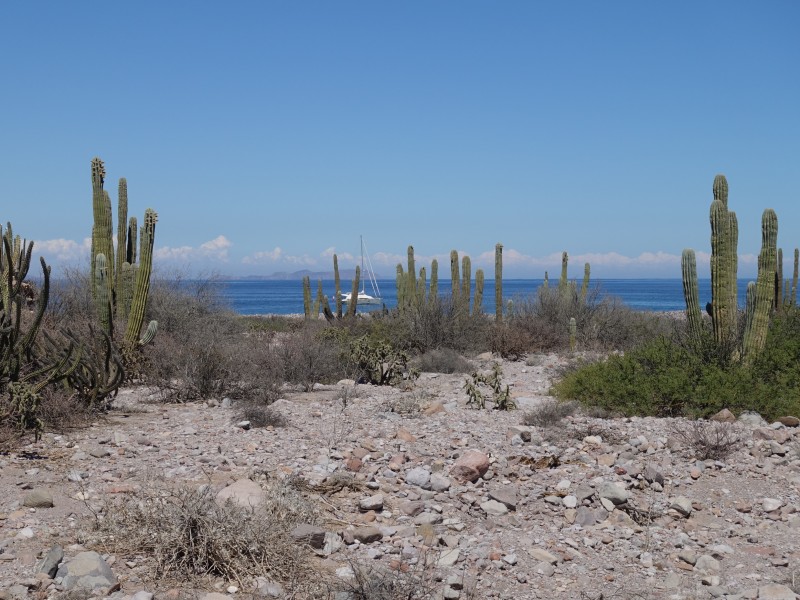
Isla San Esteban
Tags: Isla San Esteban, Mexico, sailing
Date: June 2, 2025
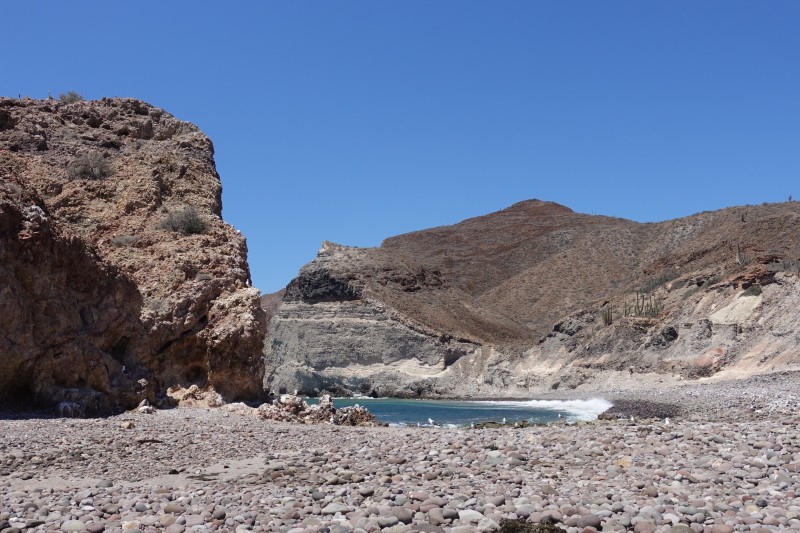
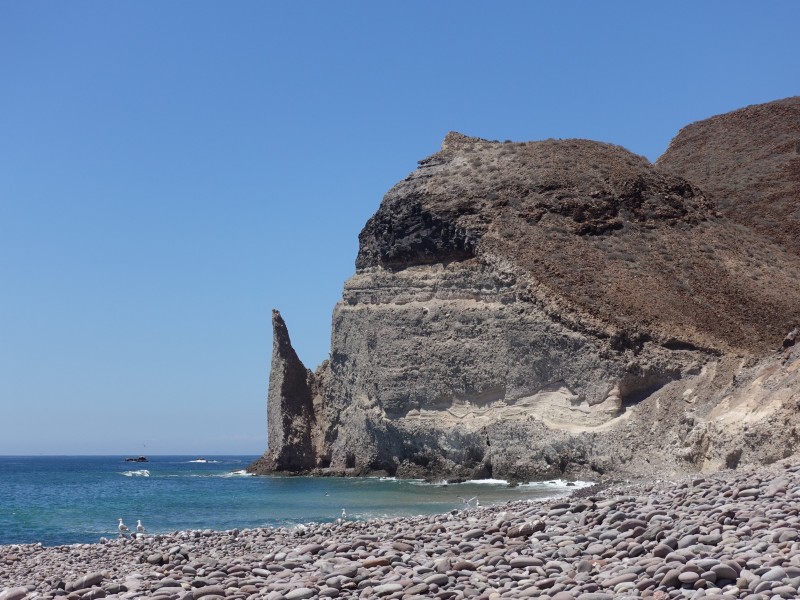
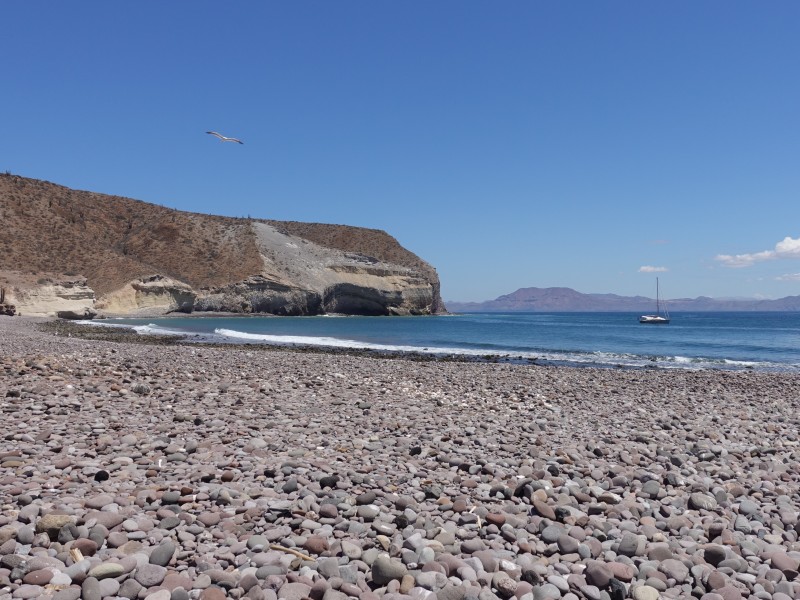
The next place we stopped was at Isla San Esteban. We anchored off a stony beach leading up an arroyo between high cliffs.
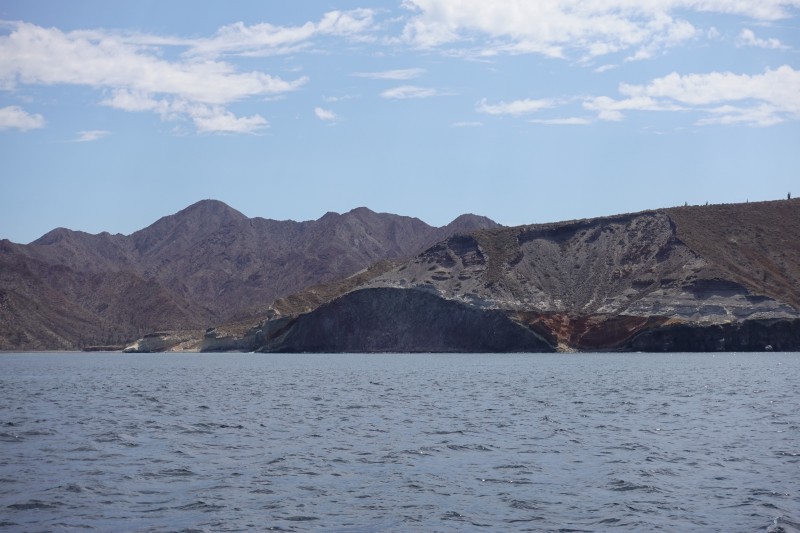
On the beach, in front of the triangular cliff, a few sea lions were sunning themselves although they are too far away to see on the pictures.
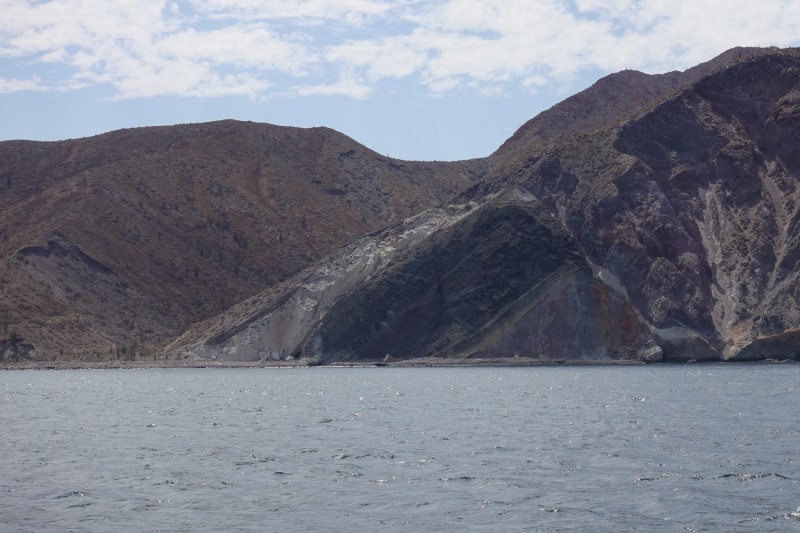
We went ashore to hike up the arroyo. This is where we landed the dinghy:
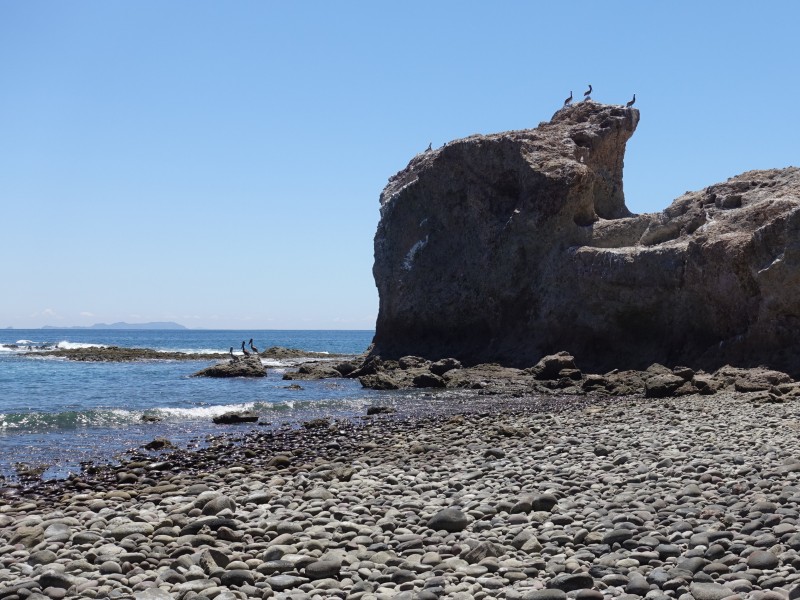
In addition to the pelicans sitting high on the rocks, there was a seagull and its chick. The chick is just visible in the left part of the picture and looks quite miserable while mum or dad stands nearby:
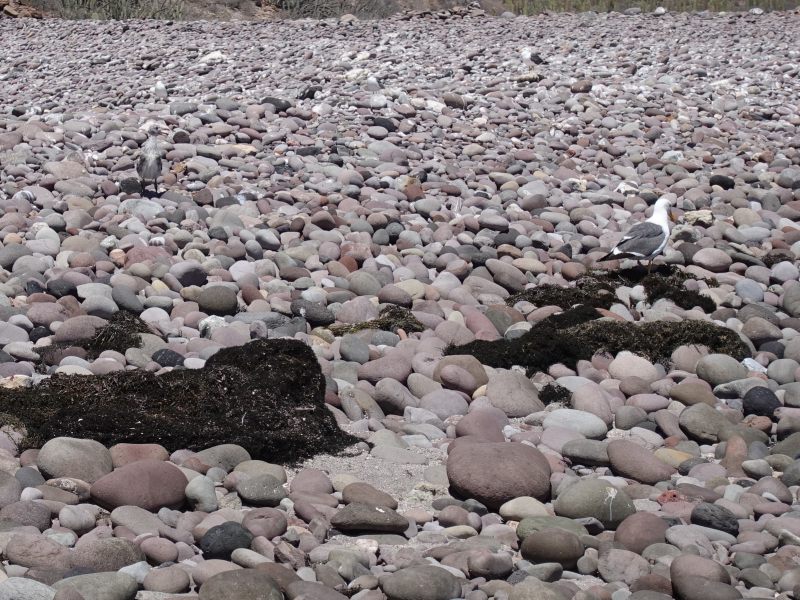
The adult seagull did not like us being on the beach and was almost constantly dive bombing us. We did not get any pictures of that because we were busy shooing it away with our hiking poles.
As soon as we were away from the beach the gull left us in peace.
Amanda at anchor off Isla San Esteban:
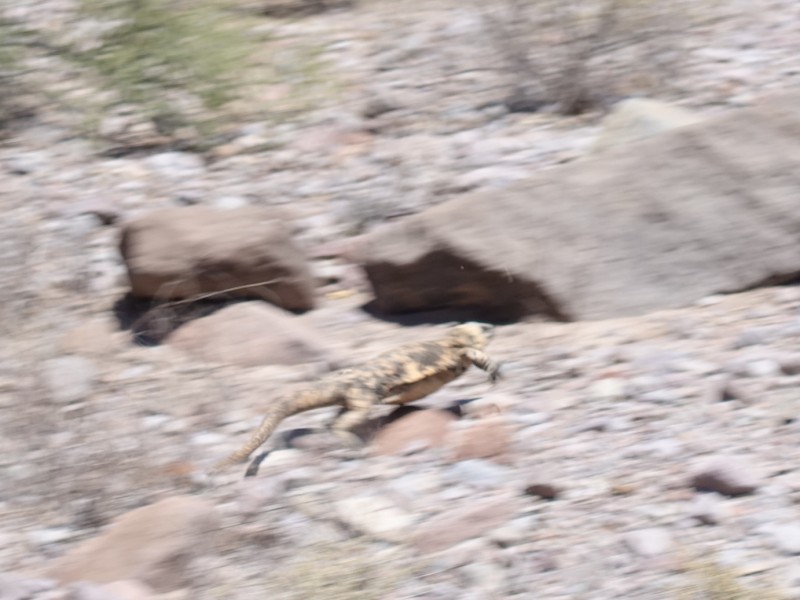
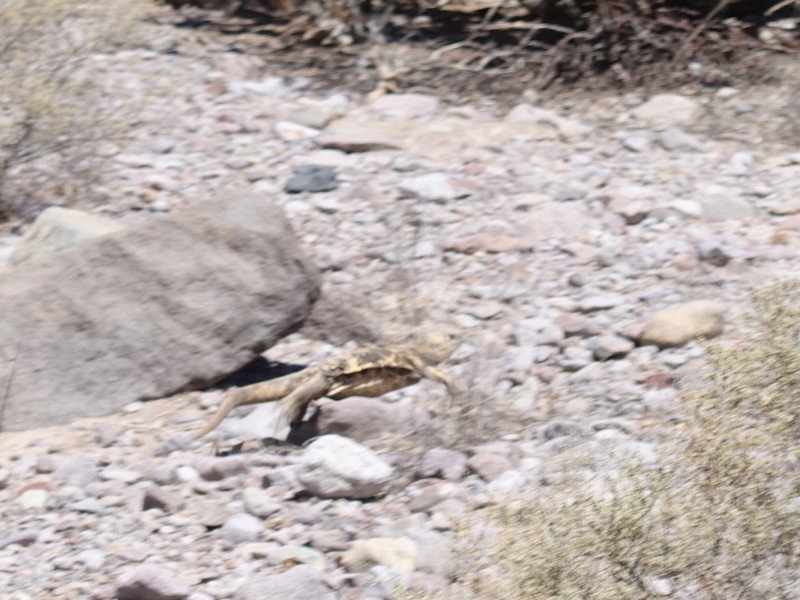
This island has en endemic species of so-called chuckwallas, a kind of lizards found primarily in arid regions of the southwestern United States and northern Mexico. Five species exist and one of them is the San Esteban chuckwalla. We saw several but had a hard time seeing (or photographing) them properly because they were very shy and extremely fast. This one is running full speed:
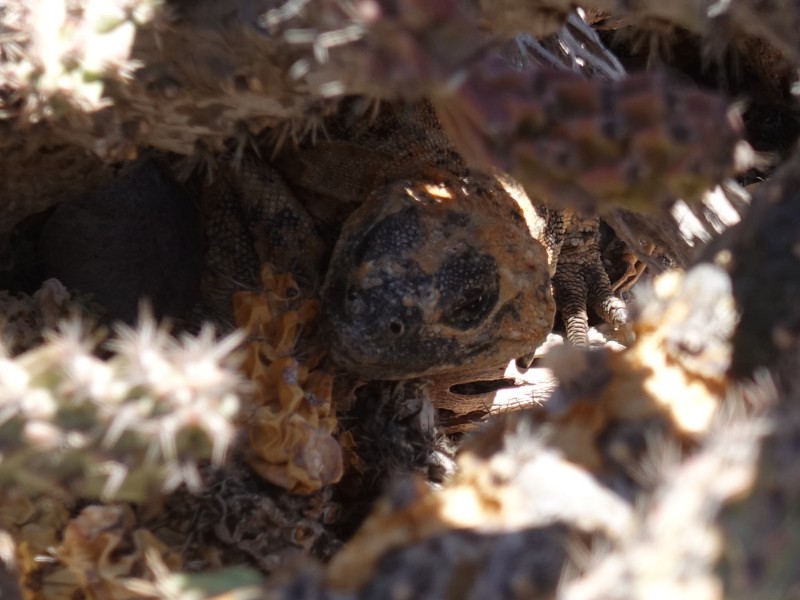
We were able to take a picture of one of them hiding under a cactus. The head with its nostrils and the left eye is visible:
Isla San Esteban is now uninhabited but before the Spanish arrived it was inhabited by the indigenous Seri or Comcaac people. The chuckwallas on Isla San Esteban was so important as a food source that the Seri on San Esteban Island used to refer to themselves as Coftécöl Comcáac, which may the translated to "People of the Giant Chuckwalla".
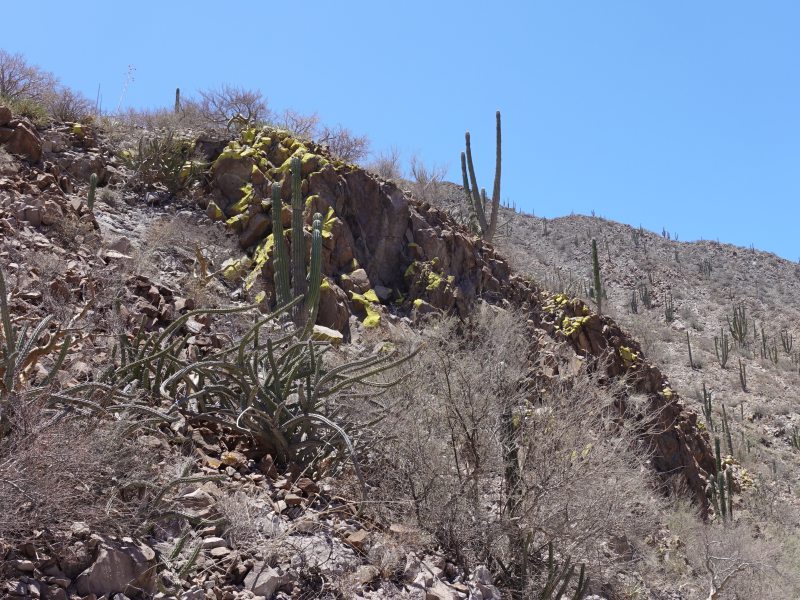
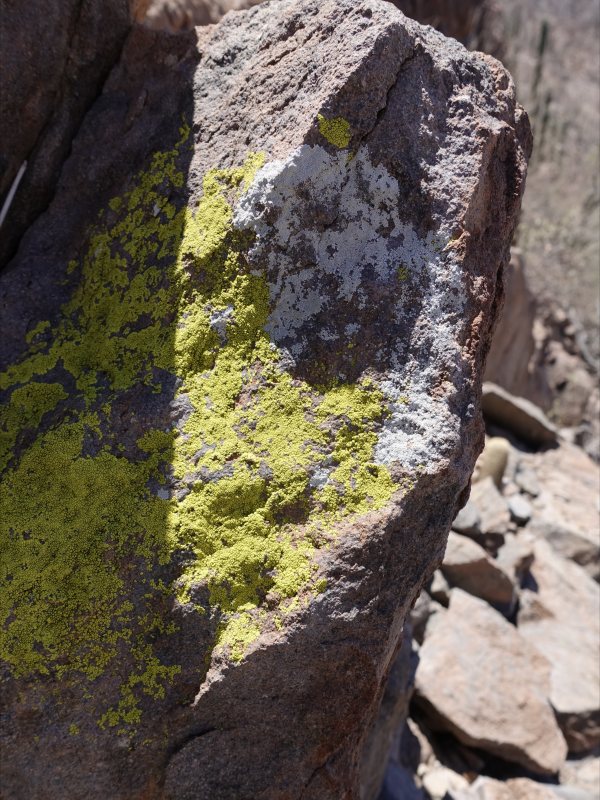
As most places around the Sea Cortez, Isla San Esteban is very dry at this time of year and the predominant color is brown. However, we found several patches of bright green lichen growing on rocks:
Close-up of the lichen:
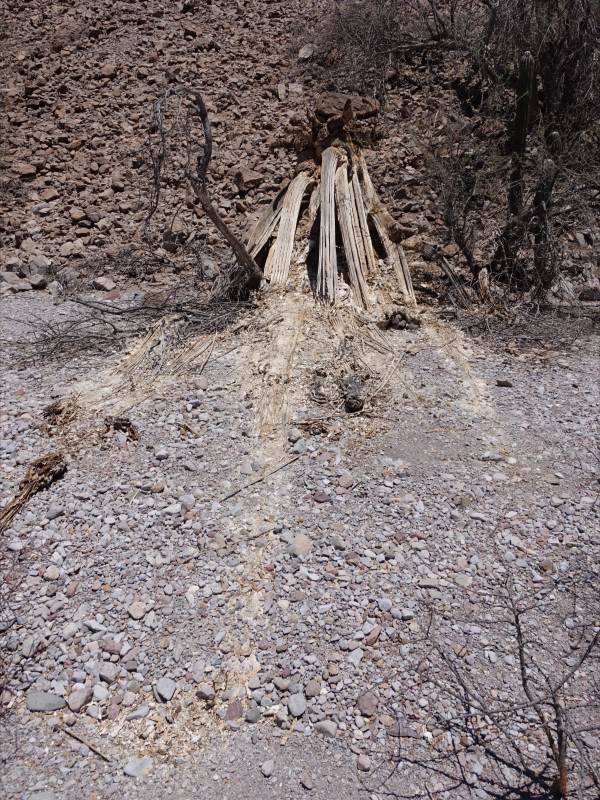
A completely collapsed, mummified cactus:
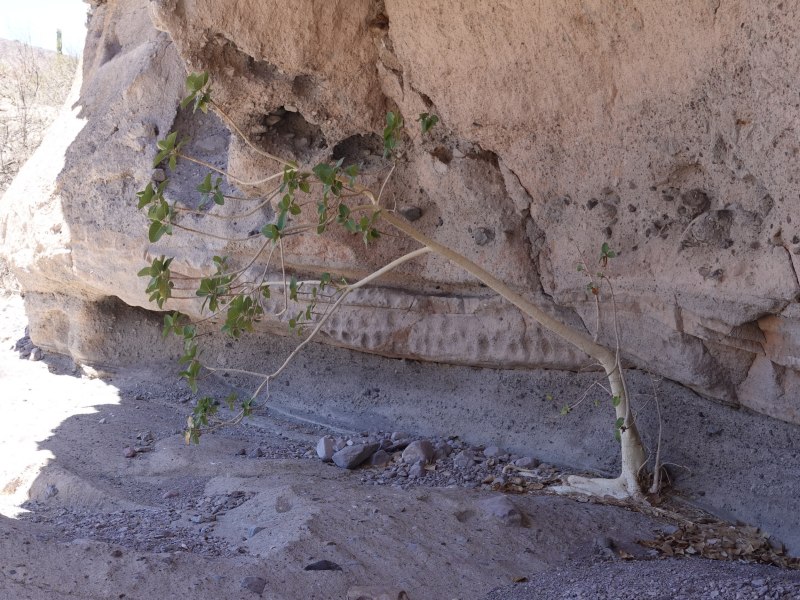
A small, crooked tree trying its luck in the shade of the cliffs:
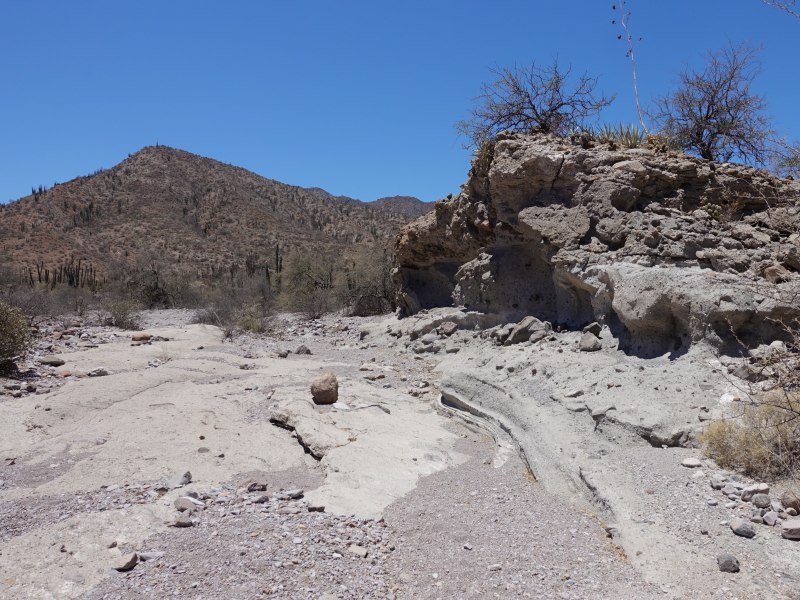
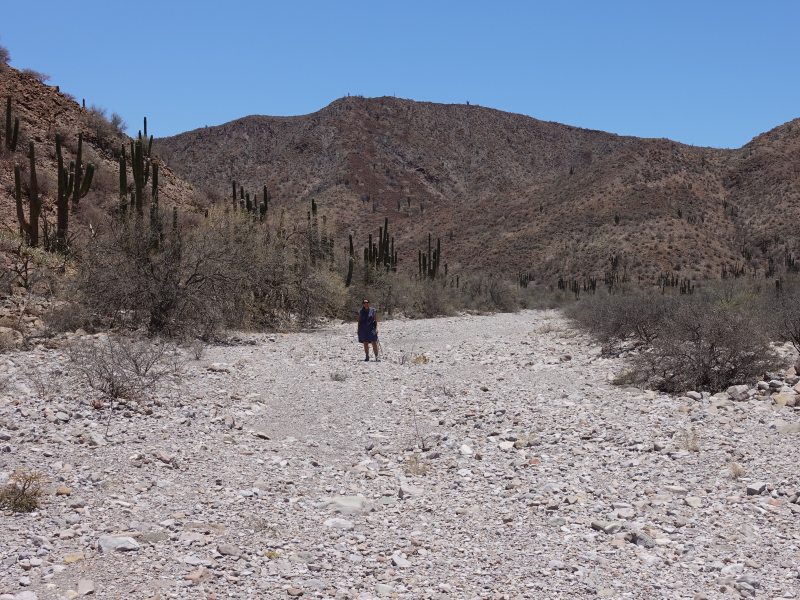
Felicie standing in the middle of the arroyo:
Back at the beach at the end of the hike: